Dreaming about waking up to open water in Gulf Breeze? Waterfront living here can be incredible, but the right purchase is about much more than a pretty view. If you are thinking about buying on the water, you need to understand how frontage type, dock rules, flood risk, wind exposure, and association documents can affect both your lifestyle and your costs. This guide will walk you through the key details so you can shop smarter and avoid surprises. Let’s dive in.
Gulf Breeze Waterfront Basics
Gulf Breeze sits on the Fairpoint Peninsula between Pensacola Bay and Santa Rosa Sound. According to the City of Gulf Breeze, the city has 18 miles of waterfront and three protected bayous. That geography gives you a range of waterfront options, not just a simple yes-or-no decision.
In practice, buyers are usually choosing between more sheltered water, such as bayous or protected channels, and more exposed frontage with wider views and quicker access toward Pensacola Pass. That difference can shape your boating experience, maintenance needs, and even how often you enjoy being outside on the property.
Know What Kind of Waterfront You Want
Not every waterfront home lives the same way. A home on a sheltered bayou may offer calmer conditions, while a property on the bay or sound may have broader views and more exposure to wind, wake, and surge. In Gulf Breeze, those differences are highly site-specific.
As you tour homes, ask exactly what water body the property fronts. A bay, sound, bayou, or channel can each create a very different day-to-day experience. The answer can also help you better understand docking conditions and how usable the water may be during changing tides.
Questions to Ask on the Tour
- What water body does the home front?
- How exposed is the property to wind, wake, and surge?
- Does the lot orientation affect privacy, sunrise, or sunset views?
- Is the view corridor likely to stay consistent, or could future shoreline changes affect it?
If boating is part of your plan, location matters beyond the backyard. The city notes that Gulf Breeze also has one of the area’s better boat ramps near Pensacola Pass, which adds useful context if you want regular on-the-water access even when a property does not have its own dock.
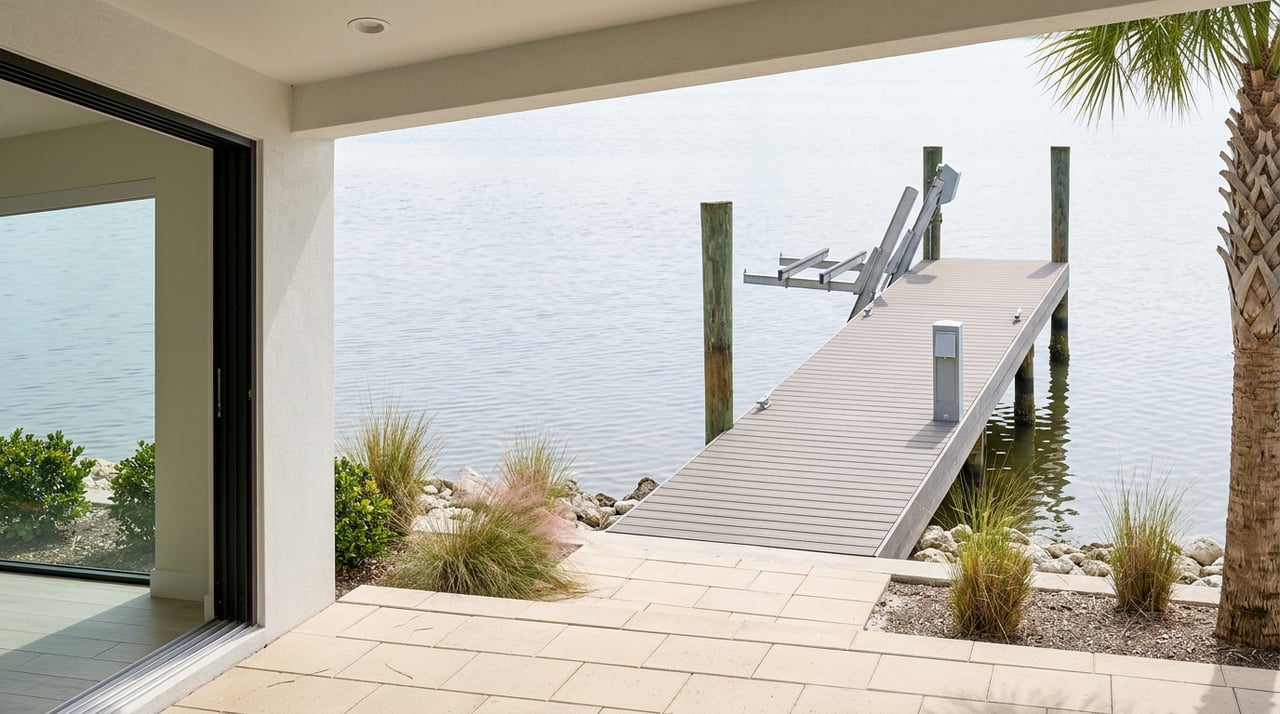
Docks and Seawalls Need Verification
One of the biggest mistakes waterfront buyers make is assuming a dock or seawall is automatically compliant, usable, or easy to modify. In Santa Rosa County, zoning approval and a building permit are required before building boathouses, docks, piers, retaining walls, and seawalls, according to the county’s coastal construction guidance.
Florida DEP also regulates coastal construction, residential docks, wetlands, and marinas. Even when a dock project may qualify for a DEP self-certification process, that does not replace local approvals. In other words, the shoreline is often the most regulated part of the property.
What to Confirm Before You Offer
- Whether the dock, lift, boathouse, or seawall already exists and is permitted
- Whether the seller can provide permit copies and maintenance records
- Whether riparian access and setbacks limit future changes
- Whether water depth at low tide works for your boat
- Whether nearby docks or shoreline features affect navigation
If a property does not already have a dock, do not assume you can simply add one later. County rules vary by water body, and shoreline standards may also consider public access, neighboring properties, and natural shoreline approaches.
Flood Risk Is a Core Buying Issue
In Gulf Breeze, flood planning should start early, not after you are under contract. The city and county participate in the National Flood Insurance Program Community Rating System, and the City of Gulf Breeze flood information page notes that standard homeowners insurance does not cover flood losses.
That means a separate flood insurance review is essential for waterfront buyers. You should also know that flood zones and evacuation zones are not the same thing. Santa Rosa County explains in its Flood Zones Versus Evacuation Zones guide that a property can be outside an evacuation zone and still be in a flood zone.
What to Review Early
- The FEMA flood zone for the specific address
- Whether the home is in a Special Flood Hazard Area
- Whether flood insurance may be required for financing
- Whether the seller has an elevation certificate
- Whether the property has prior flood claims or a history of taking in water
According to FloodSmart, high-risk flood zones begin with A or V, and government-backed mortgages on those properties generally require flood insurance. FloodSmart also says that nearly one-third of NFIP claims from 2014 to 2024 came from outside current high-risk flood areas. That is a good reminder not to treat lower-risk maps as a guarantee.
Wind Protection Matters Too
Waterfront ownership in Gulf Breeze is not only about flood exposure. Wind resilience can affect safety, repair costs, and insurance conversations. Santa Rosa County’s wind speed maps show why buyers should pay close attention to storm-hardening features in coastal areas.
As you evaluate a home, ask about roof age, opening protection, impact-rated windows and doors, and any other wind-mitigation updates. These details may be easy to overlook during a showing, but they can become major decision points once you start pricing insurance and planning future maintenance.
Features Worth Asking About
- Impact-rated windows or shutters
- Garage door wind protection
- Roof age and roof covering type
- Storm-resistant exterior doors
- Drainage improvements around the home
The city’s comprehensive planning also addresses high tide events, storm surge, flash floods, stormwater runoff, sea-level rise, shoreline stabilization, and drainage improvements. That makes resilience a practical buying issue, not just a technical one.
HOA and Condo Rules Can Reshape Waterfront Access
A waterfront address does not always mean full freedom to use the property the way you expect. If the home is part of an HOA or condo association, rules around docks, lifts, trailers, rentals, exterior changes, and shoreline maintenance can directly affect value and enjoyment.
Under Florida law, HOA official records include declarations, bylaws, current rules, permits, insurance policies, contracts, and financial records, as outlined in the state’s association records guidance. Condo communities also have governance and records resources through the Florida DBPR condo portal.
Association Items to Review
- Rules for docks, lifts, and boat trailers
- Rental restrictions or approval requirements
- Responsibility for seawalls, bulkheads, or dock repairs
- Insurance obligations and storm deductibles
- Any pending special assessments for drainage, seawall, or storm work
If you are buying a condo, ask for current rules, reserve information, and inspection-related documents before you make an offer. Those records can help you understand both your rights and your future costs.
A Smart Gulf Breeze Touring Checklist
When you walk a waterfront property, it helps to have a consistent system. The goal is to look past the view and evaluate how the property will function for your lifestyle.
Here is a practical checklist to bring with you:
- What kind of water frontage is this?
- How exposed is it to wake, wind, and surge?
- Is there an existing dock, lift, or seawall?
- Can the seller provide permits and maintenance records?
- What approvals would be needed to add or change a dock?
- What are the FEMA flood zone and county evacuation zone?
- Is there an elevation certificate on file?
- Has the property ever flooded or filed flood claims?
- What wind-mitigation features are already in place?
- Is the home on sewer or septic?
- Are there any local sewer conversion projects or assessments to know about?
- If there is an HOA or condo, what do the documents say about boats, rentals, and shoreline repairs?
The city has also noted an active septic-to-sewer conversion project in several areas, so utility setup is another smart topic to ask about early.
Features That Often Add Real Value
In Gulf Breeze, the best waterfront buys often share a few common traits. They do not just offer water views. They offer usable access, documented improvements, and fewer unknowns.
Prioritize these features when possible:
- Documented water access rather than a waterfront label alone
- A permitted dock or a realistic path to obtaining one
- Flood resilience, including elevation and drainage
- Wind protection that matches coastal exposure
- Clear association rules that support your intended use
These factors can make a major difference in both your daily enjoyment and your long-term ownership costs.
Waterfront Buying Comes Down to Details
Buying waterfront in Gulf Breeze can be incredibly rewarding, but the details matter more here than in many inland purchases. The exact water body, shoreline condition, permit history, flood zone, wind protection, and association documents all shape whether a property truly fits your goals.
If you want help sorting through those details, local guidance can save you time and help you ask better questions before you commit. When you are ready to explore Gulf Breeze waterfront opportunities, connect with Matthew Pace PA to schedule a free consultation.
FAQs
What should buyers know about Gulf Breeze waterfront property types?
- Buyers should ask whether a home fronts Pensacola Bay, Santa Rosa Sound, a bayou, or another sheltered channel because exposure, wake, views, and boating conditions can vary widely by water body.
What should buyers verify about docks and seawalls in Gulf Breeze?
- Buyers should confirm whether docks, lifts, boathouses, and seawalls are permitted, ask for maintenance records, and verify whether local rules would allow repairs, rebuilding, or future additions.
What flood information should buyers check for a Gulf Breeze waterfront home?
- Buyers should review the FEMA flood zone, determine whether the property is in a Special Flood Hazard Area, ask for an elevation certificate, and ask about prior flooding or flood claims.
What is the difference between flood zones and evacuation zones in Santa Rosa County?
- Flood zones relate to FEMA flood risk and insurance, while evacuation zones relate to storm surge planning, and a property may be in one without being in the other.
What HOA or condo documents matter for Gulf Breeze waterfront buyers?
- Buyers should review governing documents, current rules, insurance information, financial records, and any special assessment details related to docks, shoreline maintenance, rentals, or storm repairs.
What home features are important for Gulf Breeze wind protection?
- Buyers should ask about roof age, impact-rated windows and doors, shutters, garage door protection, and other storm-hardening features that support coastal resilience.